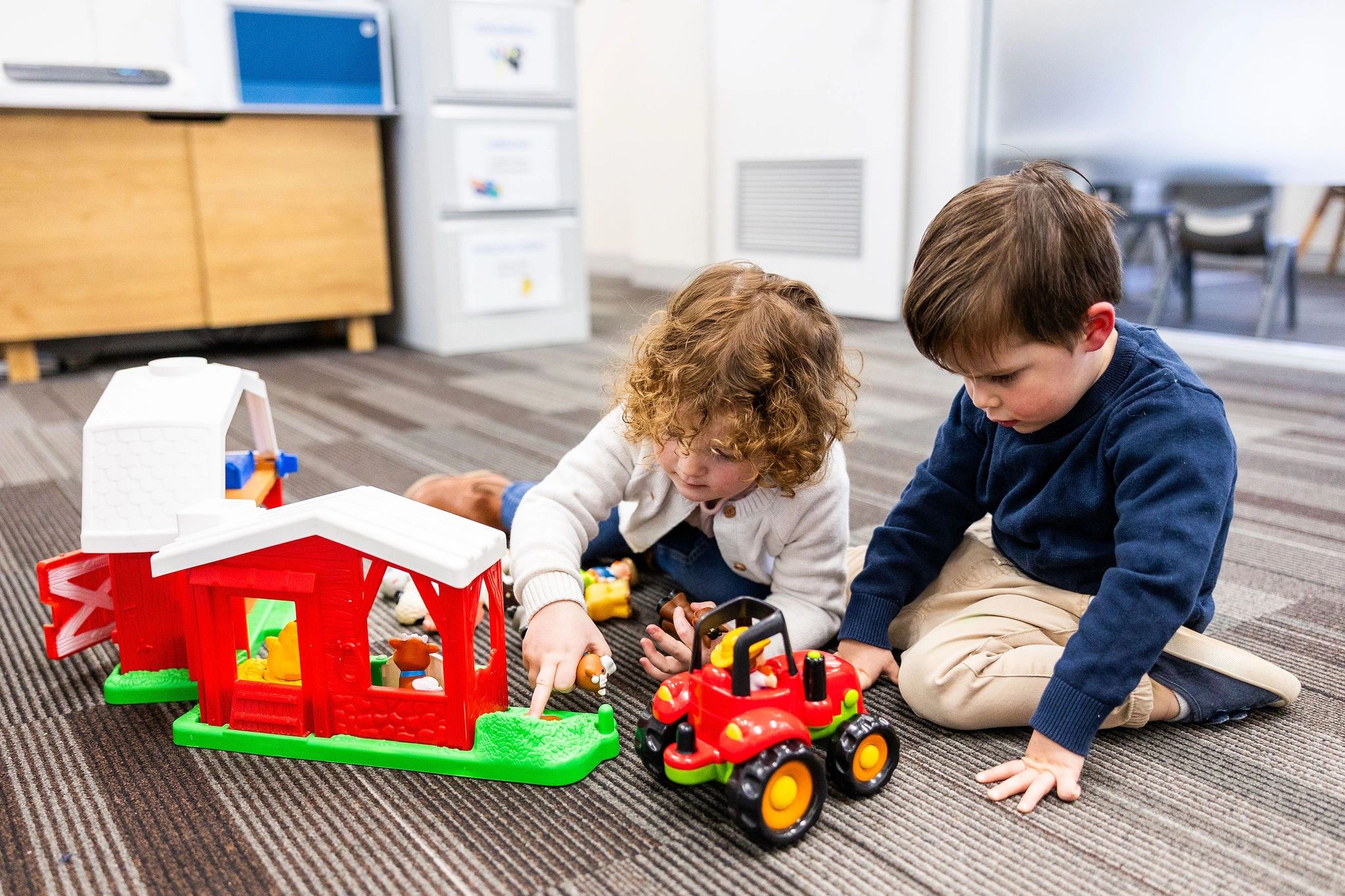
What speech pathology involves for children
Speech pathologists (sometimes called speech therapists) work with children on much more than just talking clearly. Their scope includes:
- Speech sounds — helping a child pronounce sounds and words so others can understand them.
- Language — understanding words and instructions (receptive language) and putting words together to express ideas (expressive language).
- Social communication — using language to interact, take turns and make friends.
- Stuttering and fluency — supporting smoother, more confident speech.
- Voice — addressing hoarseness or vocal strain.
- Feeding and swallowing — helping children who struggle with eating, drinking or managing certain textures.
- Early literacy — laying foundations for reading and writing.
Support is usually play-based and tailored to each child, often involving parents so skills carry over at home.
Signs your child might benefit from support
Every child develops at their own pace, but it can be worth seeking advice if your child:
- Is not babbling, using words or combining words in line with typical milestones
- Is hard to understand for their age (for family or unfamiliar listeners)
- Becomes frustrated when trying to communicate
- Isn't following simple instructions or answering questions
- Repeats sounds or words, or gets "stuck" when speaking
- Has ongoing difficulty with eating, drinking or textures
- Isn't making eye contact or interacting as you'd expect
If you're unsure, a speech pathologist or your GP can help you decide whether an assessment is worthwhile. Trust your instincts — early support is often easier and more effective.
Suitable ages
Speech pathologists work with children from infancy (including feeding support for babies) through the early years, primary school and into adolescence. Early intervention — generally before school age — can be especially valuable, but it's never too late to seek help.
What a first appointment looks like
An initial appointment is usually an assessment and chat. Expect the therapist to:
- Ask about your child's history, development, health and your concerns
- Play with and observe your child, and use informal or standardised assessments
- Discuss what they've noticed and whether therapy is recommended
- Set some early goals and outline a possible plan
Bring any relevant reports (from your GP, paediatrician, childcare or school) and a list of your questions. First appointments often run 45–60 minutes.
Typical costs and NDIS funding
As a general guide, private speech pathology sessions in Australia commonly range from around $180 to $220+ per hour. The NDIS publishes price caps for therapy, and many providers align their fees with these. Costs can vary with session length, assessments, report writing and travel, so always confirm fees in writing before you start.
Under the NDIS, speech pathology is typically funded through Capacity Building — Improved Daily Living. How you use this depends on how your plan is managed:
- NDIA-managed — you must use NDIS-registered providers.
- Plan-managed — you can use registered or non-registered providers, with a plan manager paying invoices.
- Self-managed — you have the most flexibility in choosing providers.
If you don't have NDIS funding, some costs may be claimable through private health extras or a Medicare Chronic Disease Management plan (limited sessions, via your GP). Check your eligibility and rebates directly.
How to choose a provider in Canberra
This page features Canberra practices across suburbs including Forrest, Mawson, Griffith, Belconnen, Fyshwick, Deakin, Harrison, Bruce, Rivett and Canberra City. When comparing options, consider:
- NDIS registration — confirm whether they're registered, especially if your plan is NDIA-managed.
- Credentials — check the therapist is a Certified Practising Speech Pathologist and a member of Speech Pathology Australia. Practices may also employ allied health assistants under supervision.
- Experience — ask about their experience with your child's specific needs (e.g. stuttering, autism, feeding).
- Waitlists — waitlists can be long, so ask upfront how soon your child can start.
- Telehealth — video sessions can be handy for busy families or those further out, and many providers offer them.
- Location and logistics — clinic, home visits, or school/childcare visits.
- Reviews and fit — ratings help, but a good rapport between the therapist and your child matters most.
Questions to ask before you book
- Are you a Certified Practising Speech Pathologist with Speech Pathology Australia?
- Are you NDIS registered, and do you work with plan-managed and self-managed clients?
- What's your current waitlist for new clients?
- What experience do you have with my child's needs?
- What are your fees for assessment, therapy, reports and travel?
- How will you involve me and share progress?
- Do you offer telehealth, home or school visits?
Taking a little time to compare providers helps you find the right fit for your child and family.