What support coordination involves for children
Support coordination is a funded NDIS service that helps you make the most of your child's plan. A support coordinator works alongside your family to explain what's in the plan, find and connect with suitable providers (such as speech pathologists, occupational therapists and psychologists), coordinate appointments, and monitor how your child is progressing towards their goals.
For children, this often means the coordinator liaises with therapists, schools, early childhood services and health professionals so you're not left juggling every conversation yourself. There are generally three levels of support: Support Connection (short-term help to link you with services), Support Coordination (ongoing help to build your skills and coordinate a mix of supports), and Specialist Support Coordination (for more complex situations involving higher risk or multiple services). The level available to you is set out in your child's NDIS plan.
Signs a child and family might benefit
Support coordination isn't about the child's diagnosis so much as the complexity of the situation. Your family might benefit if:
- You've just received a plan and feel overwhelmed about where to start.
- Your child needs several different therapies and providers who need to work together.
- You're finding it hard to locate providers with availability, or you're stuck on long waitlists.
- You're moving between services (for example, from early childhood supports into a school-age plan).
- You want help understanding your budgets and making funding last across the plan period.
Suitable ages
Support coordination can be included in plans for children of any age. For children under 9, families often work within the NDIS early childhood approach, where an early childhood partner may provide connections and coordination. For school-aged children and teenagers, dedicated support coordination is common when a plan involves multiple supports or transitions, such as starting high school or planning towards adulthood.
What a first appointment looks like
Your first meeting is usually a relaxed conversation — in person, by phone or via telehealth. The coordinator will:
- Read through your child's plan with you and explain each budget.
- Ask about your child's goals, routines, strengths and challenges.
- Discuss the services you already have and what you're still looking for.
- Talk through your preferences (for example, telehealth vs in-clinic, provider location, or cultural considerations).
- Agree on next steps, such as researching providers or arranging referrals.
Bring a copy of the NDIS plan, any existing therapy reports, and a list of questions. It helps to jot down what a good outcome looks like for your family over the coming year.
Typical AU costs and NDIS funding lines
Support coordination is funded under the Capacity Building — Support Coordination budget in your child's plan. This funding is separate from your Core and other Capacity Building budgets, so using it does not reduce the money available for therapy.
The NDIS sets price caps that support coordinators cannot exceed. As a general guide, hourly rates in Australia commonly fall in the $100–$200+ range depending on the level of coordination, with Specialist Support Coordination priced higher than standard coordination. Your plan will show a dollar amount rather than a set number of hours, so ask your coordinator to estimate how many hours that translates to and how they'll pace it across the plan. These figures are general ranges only — always check the current NDIS Pricing Arrangements and Price Limits and confirm rates with the provider before you begin.
How to choose a provider in Canberra
When comparing providers, look at:
- NDIS registration: If your child's plan is NDIA-managed, you'll generally need a registered provider. Plan-managed and self-managed families have more flexibility, but it's still worth confirming registration status.
- Credentials and background: Many quality coordinators come from allied health or social work backgrounds. If a provider offers therapy too (speech pathology, OT, psychology), check that therapists are registered with the relevant body — Speech Pathology Australia, AHPRA, or Occupational Therapy Australia. Ask about any potential conflict of interest if the same organisation provides both coordination and therapy.
- Waitlists: Availability varies across Canberra. Ask directly how soon they can start and how quickly they respond to messages.
- Telehealth: Many coordinators offer phone and video support, which can be handy for busy families or those in outer suburbs.
- Local knowledge: A coordinator familiar with Canberra services, schools and clinics can connect you faster.
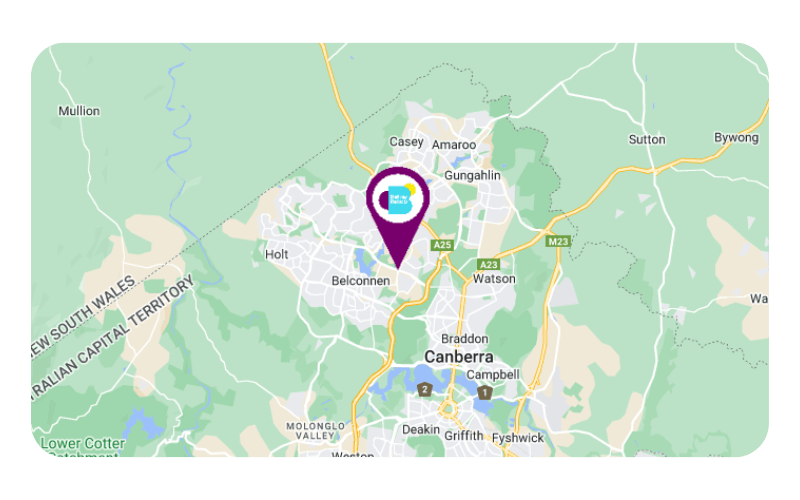
This page features several local providers to help you compare, including Therapy Near Me Canberra (Canberra City), AbilitySeer (Watson), Better Rehab - Canberra (Bruce), Think. Do. Speak. (Jerrabomberra) and Link365 (Watson). Ratings and review counts shown are a starting point only — always do your own checks.
Questions to ask before you commit
- Are you an NDIS-registered provider, and do you work with NDIA-managed plans?
- What's your current waitlist and how do you communicate with families?
- How many hours of coordination do you estimate my child's funding covers?
- Do you provide other services, and how do you manage any conflict of interest?
- Can you offer telehealth as well as in-person support?
- How will you report on progress and keep me involved in decisions?
- What happens as we approach plan review time?
Choosing the right coordinator can make your NDIS journey far less stressful — take your time, ask questions and pick someone who listens.