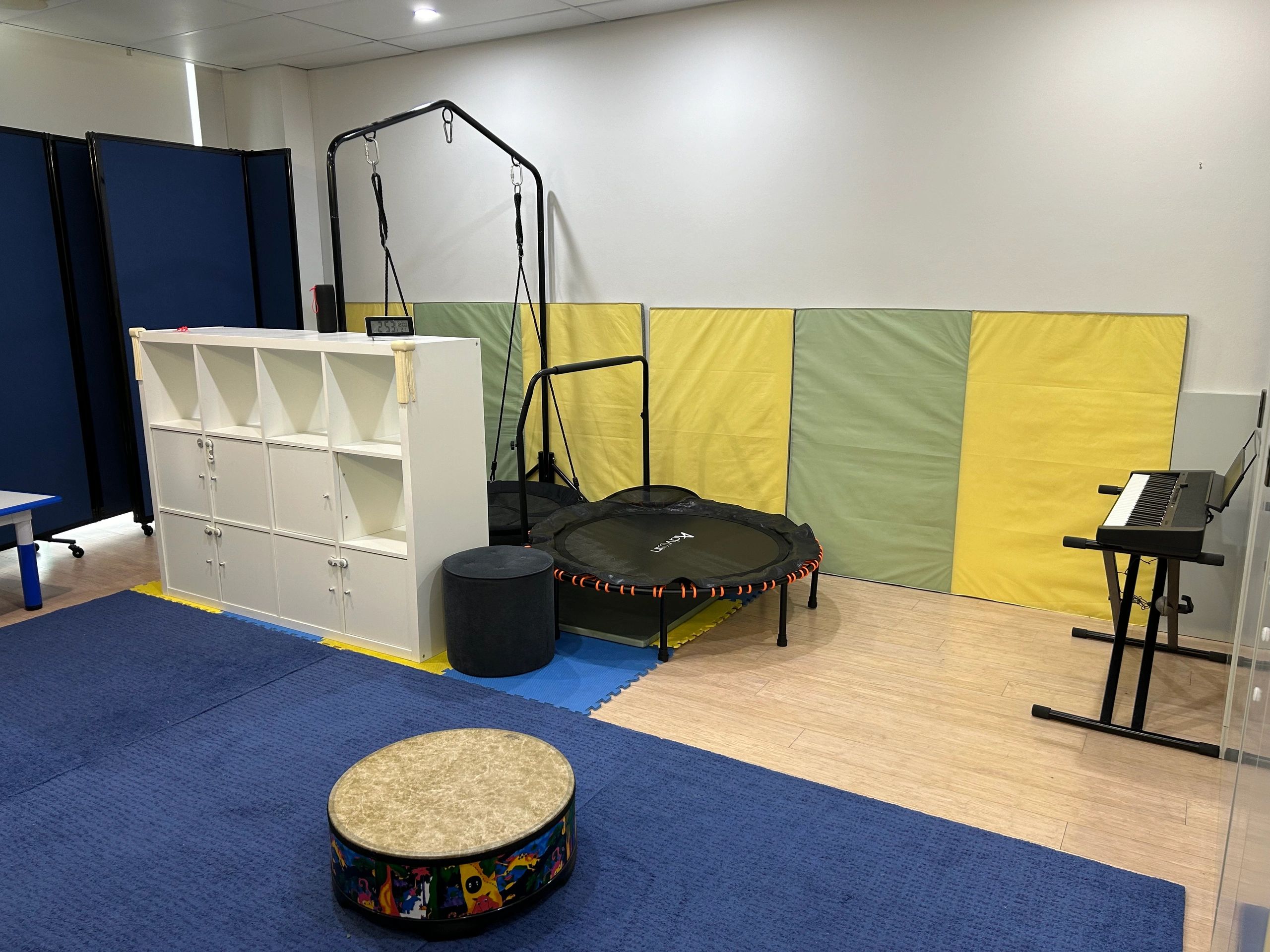
What occupational therapy involves for children
Occupational therapy for children focuses on the everyday "occupations" of childhood — playing, learning, self-care and social participation. An OT looks at the skills and environments that help a child do these things more independently. Common areas of support include:
- Fine motor skills — handwriting, using scissors, doing up buttons, cutlery use.
- Gross motor and coordination — balance, ball skills, body awareness.
- Sensory processing — helping children who are over- or under-sensitive to sound, touch, movement or light.
- Daily-living skills — dressing, toileting, mealtimes and sleep routines.
- Attention, regulation and play — building focus, managing big emotions and engaging with peers.
OTs work collaboratively with families and often with schools, so strategies carry over into home and the classroom.
Signs a child might benefit from OT support
Every child develops at their own pace, but you might consider an OT assessment if your child:
- Finds handwriting, drawing or using tools frustrating or very tiring.
- Avoids or seeks out lots of movement, or reacts strongly to noise, textures or clothing tags.
- Struggles with self-care tasks (dressing, toileting, eating) beyond what's typical for their age.
- Has trouble with balance, coordination or seems clumsy.
- Finds it hard to sit still, follow routines or manage transitions.
- Gets easily overwhelmed or has difficulty calming down.
If you have concerns, it's worth speaking with your GP, paediatrician or child health nurse. Only a qualified professional can assess your child — this guide is general information, not medical advice.
Suitable ages
Children's OTs work with a wide age range, from toddlers through to teenagers. Early support (in the preschool years) can be very effective, but OT can help at any stage — including school-aged children building handwriting and independence, and older kids working on organisation and daily routines.
What a first appointment looks like
A first session usually starts with a conversation about your concerns, your child's development and daily routines. The OT may observe your child playing or completing tasks, and might use standardised assessments. They'll typically discuss goals with you and outline a plan, which could include regular sessions, home strategies and collaboration with your child's school or educators. Bring along any reports from your GP, paediatrician or school, plus your NDIS plan if you have one.
Typical costs and NDIS funding
As a general guide, private OT sessions in Australia commonly range from around $180 to $220+ per hour. The NDIS publishes price caps for therapy supports, which set the maximum providers can charge NDIS participants — these are reviewed regularly, so check the current NDIS Pricing Arrangements. Always confirm fees directly with the provider, as prices vary and this is a general range only.
If your child is an NDIS participant, OT is usually funded under Capacity Building — Improved Daily Living. This funding can cover assessments, therapy sessions, reports and some travel or telehealth. Assessment reports may also be funded to support NDIS plan reviews. If you're not sure how your plan works, your plan manager or support coordinator can help you understand what's available.
Some families also access limited support through Medicare (via a GP Chronic Disease Management plan, which offers a set number of rebated allied health visits per year) or private health extras cover. Check with your GP and health fund about eligibility and rebates.
How to choose an OT provider in Sydney
When comparing providers, consider:
- NDIS registration — if you're NDIS-funded, check whether the provider is NDIS-registered. Self-managed and plan-managed participants can often use unregistered providers too, but it's worth confirming.
- Therapist credentials — occupational therapists in Australia must be registered with AHPRA (the Australian Health Practitioner Regulation Agency). You can verify a therapist's registration on the AHPRA public register. Membership of Occupational Therapy Australia is a positive sign of professional engagement.
- Experience with your child's needs — ask whether the therapist regularly works with children of your child's age and presentation.
- Waitlists — Sydney demand is high, so ask about current wait times for an initial appointment. Some providers keep separate waitlists for assessment versus ongoing therapy.
- Location and telehealth — consider travel time and whether clinic, home-visit or telehealth sessions suit your family. Telehealth can be useful for review sessions or families further from clinics.
This page features Sydney providers including Bloom Healthcare (Sydney CBD), Child Led Therapies (Crows Nest), Therapies For Kids (Lilyfield and Leichhardt), North Shore Kids Therapy (Artarmon), Kids on Top (Haberfield), Therapy Near Me Sydney (Barangaroo), Kids World (Lane Cove), North Shore Play Therapy (North Sydney), Active OT For Kids (Bondi Junction), Child Sense (Leichhardt) and Kids First Therapy Hub (Edgecliff). We suggest contacting a few to compare fit, availability and approach.
Questions to ask a provider
- Is the therapist registered with AHPRA, and do they work regularly with children like mine?
- Are you NDIS-registered, and do you support plan-managed or self-managed participants?
- What's your current waitlist for assessment and for ongoing therapy?
- What does an initial assessment cost and what's included?
- Do you offer home visits, school visits or telehealth?
- How do you set goals and measure progress, and how will you keep me involved?
- Will you liaise with my child's school and other professionals?