What early intervention involves
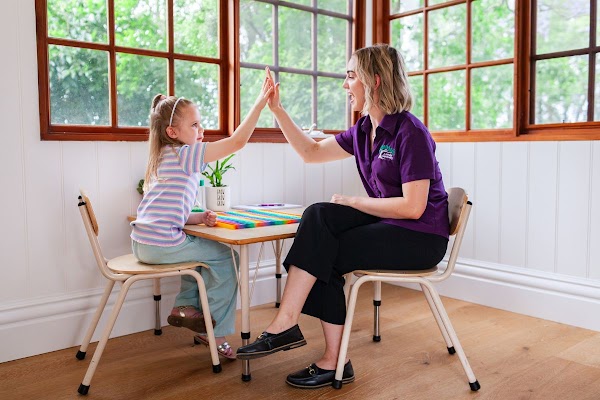
Early intervention (sometimes called Early Childhood Intervention, or ECI) supports children aged 0–6 who have a developmental delay or disability. The aim is to help your child build skills across areas like communication, movement, play, social interaction and daily living — and to support you as a parent to feel confident helping your child at home.
Good early intervention is usually multidisciplinary, meaning several professionals may be involved depending on your child's needs. This can include speech pathologists (communication, feeding), occupational therapists (fine motor, sensory, self-care), physiotherapists (movement), psychologists and early childhood educators. Many programs use a family-centred, coaching approach so that everyday routines — meals, play, getting dressed — become opportunities for learning.
Signs a child might benefit from support
Every child develops at their own pace, but it can be worth seeking advice if your child:
- Isn't babbling, pointing or using words by the ages you'd expect
- Has trouble understanding simple instructions
- Rarely makes eye contact or shows limited interest in playing with others
- Is slow to reach motor milestones like sitting, crawling or walking
- Struggles with feeding, chewing or trying new textures
- Gets very distressed by sounds, textures, or changes to routine
- Has lost skills they previously had
You don't need to wait for a formal diagnosis to start. If something doesn't feel right, trust your instincts and raise it with your GP, child and family health nurse, or paediatrician.
Suitable ages
Early intervention specifically targets children from birth to around 6 years. Under the NDIS, children under 9 can access support through the early childhood approach, which is designed to connect families with the right supports quickly — sometimes without needing a full NDIS plan.
What a first appointment looks like
A first appointment is usually a relaxed conversation and observation rather than a test. The therapist will:
- Ask about your child's development, health history and your concerns
- Watch your child play or interact
- Sometimes carry out a standardised assessment
- Talk with you about goals for your child and family
Bring along any reports (from a paediatrician, audiologist or child health nurse), your child's health record (blue book), and a list of your questions. It helps to bring a comforter or favourite toy so your child feels settled.
Typical costs and NDIS funding
As a general guide, allied health sessions in Australia commonly range from about $180 to $220+ per hour. The NDIS publishes price caps that registered providers must not exceed, and these are updated regularly — so always confirm current pricing directly with the provider. Assessments and report-writing are usually charged separately.
If your child has an NDIS plan, early intervention supports typically sit under the Capacity Building — Improved Daily Living budget, which funds therapy from qualified allied health professionals. Some families also use Improved Relationships or Improved Health and Wellbeing lines depending on goals.
If you don't have NDIS funding, you may be able to access some services through Medicare (with a GP-referred Chronic Disease Management or mental health plan, which offer limited rebated sessions) or privately. Ask each provider what payment and funding options they accept.
How to choose a provider in Newcastle
This page features local services across Newcastle, Lake Macquarie and Maitland — including A Growing Understanding Speech Pathology (Warners Bay and Adamstown), Leaps & Bounds Speech Pathology (Charlestown), ConnectAbility encompassing Early Links (Maitland), Blue Gum Early Childhood Intervention (Charlestown), Newcastle Paediatric Occupational Therapy (Belmont North), Early Start Speech Pathology (Lambton and Warners Bay), and others in Fletcher, Kotara and Wallsend.
When comparing providers, check:
- NDIS registration — you can use registered or unregistered providers if you're plan- or self-managed, but agency-managed plans generally require registered providers. Confirm this early.
- Therapist credentials — speech pathologists should be certified practising members of Speech Pathology Australia; occupational therapists should be registered with AHPRA (and may be members of Occupational Therapy Australia); psychologists are AHPRA-registered.
- Waitlists — these can be long for early intervention, so ask how long you'll wait and whether you can join a cancellation list.
- Telehealth — some sessions can be delivered online, which can help with access and reducing travel.
- Approach and fit — ask whether they use a family-centred, coaching model and whether they'll work in settings like your home or your child's preschool.
Questions to ask
- Are you registered with the NDIS, and what funding do you accept?
- What are your qualifications and professional memberships?
- How long is your current waitlist?
- Do you offer telehealth or in-home/preschool visits?
- How do you set goals and involve parents?
- What are your session, assessment and report fees?
- How will you measure and review my child's progress?
Starting early makes a real difference. A short phone call to two or three providers will quickly give you a sense of who feels like the right fit for your family.