What speech pathology involves for children
Speech pathologists (sometimes called speech therapists) work with children across a broad range of areas — far beyond just "getting sounds right". Their work can include:
- Speech sounds — helping a child be understood by family, friends and teachers.
- Language — understanding what others say (receptive language) and putting words and sentences together (expressive language).
- Social communication — using language to interact, take turns and make friends.
- Stuttering and fluency — supporting smoother, more confident talking.
- Literacy — early reading, spelling and phonological awareness.
- Feeding and swallowing — safe eating and drinking, and support for fussy or restricted eaters.
- Alternative and augmentative communication (AAC) — tools like picture boards or apps for children who are not yet speaking.
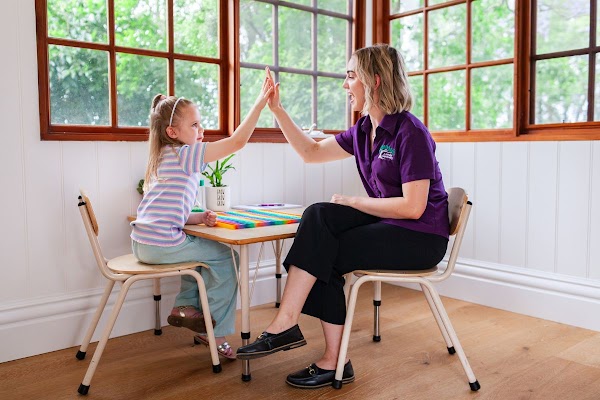
Therapy is usually play-based for younger children and tailored to each child's goals, with families involved so skills carry over into everyday life.
Signs your child might benefit from support
Every child develops at their own pace, but it can be worth seeking advice if you notice:
- Few or no words by around 18 months, or not combining words by two years
- Speech that's hard for unfamiliar people to understand by around three
- Difficulty following instructions or answering questions
- Frustration or frequent tantrums linked to not being understood
- Stuttering that lasts more than a few months or causes distress
- Trouble with eating textures, gagging or very limited food range
- Struggles with early reading, rhyming or letter sounds at school
If you're unsure, a speech pathologist can complete an assessment and reassure you or recommend next steps.
Suitable ages
Speech pathology supports children from infancy (including feeding support for babies) right through the school years and into the teens. Early support can be very helpful, but it's never "too late" to start — therapy is adapted to the child's age and stage.
What a first appointment looks like
An initial appointment usually runs 45–60 minutes. The speech pathologist will:
- Talk with you about your concerns, your child's history and daily routines.
- Observe and play with your child, or run informal or standardised assessments.
- Discuss what they've noticed and whether ongoing therapy is recommended.
- Set some early goals with you and outline how often sessions might be needed.
Bring along any reports from your GP, paediatrician, daycare or school. It helps to jot down specific examples of what worries you beforehand.
Typical costs and NDIS funding
As a general guide, private speech pathology sessions in Australia commonly range from around $180 to $220+ per hour, with assessments and report writing sometimes charged separately. The NDIS publishes price caps that registered providers work within, so costs can vary. Always confirm fees directly with the provider, as these are general ranges only and change over time.
Under the NDIS, speech pathology usually sits under Capacity Building — Improved Daily Living. Depending on how your plan is managed (agency-managed, plan-managed or self-managed), you may have different options for which providers you can use. Some families also access support through Medicare (with a GP care plan giving a limited number of rebated sessions) or private health extras — check your individual cover.
How to choose a provider in Newcastle
The Newcastle and Lake Macquarie area has a strong choice of clinics, including several featured on this page such as Newcastle Speech Pathology (Cooks Hill), A Growing Understanding Speech Pathology (Warners Bay and Adamstown), Quinn Health & Development (Gateshead), Articulate Speech Pathology (Cardiff) and Little Star Speech Therapy (Broadmeadow). When comparing options, consider:
- Credentials — check the therapist is a Certified Practising Speech Pathologist and a member of Speech Pathology Australia. This confirms qualifications and ongoing professional standards.
- NDIS registration — if you're agency-managed, you'll need an NDIS-registered provider. Plan-managed and self-managed families have more flexibility, but it's still worth asking.
- Waitlists — demand is high in Newcastle, and waitlists can stretch from weeks to several months. Ask about current wait times and whether you can join more than one list.
- Experience with your child's needs — some clinics have particular strengths (for example feeding, stuttering, AAC or early language).
- Telehealth — video sessions can be a good option for families in outer suburbs or with busy schedules. Ask whether it's offered and if it suits your child.
- Location and logistics — clinic vs home vs school visits, parking, and appointment times.
Questions to ask before you book
- Are you a Certified Practising member of Speech Pathology Australia?
- Are you NDIS registered, and can you support plan-managed or self-managed clients?
- What's your current waitlist for assessment and for ongoing therapy?
- Do you have experience with my child's specific concerns?
- What are your fees for assessments, sessions and reports?
- How do you involve parents and share home practice?
- Do you offer telehealth or visits to daycare/school?
- How do you measure progress and review goals?
Choosing a speech pathologist is often about fit as much as credentials. A good therapist will explain things clearly, listen to your priorities and make both you and your child feel comfortable.