What is support coordination?
Support coordination is a funded NDIS service that helps you understand and put your child's plan into action. A support coordinator connects the dots between your goals, your funding, and the mix of therapists, community services and mainstream supports your child needs. Rather than delivering therapy themselves, they help you build a team, book services, resolve issues, and prepare for your next plan review.
There are generally three levels of support:
- Support connection — short-term help to build your confidence in using your plan.
- Support coordination — the most common level, helping you understand and implement your plan and coordinate a range of supports.
- Specialist support coordination — for more complex situations where a higher level of expertise is needed to reduce barriers and manage risk.
The level your child receives is set out in their NDIS plan.
Signs your child might benefit
A support coordinator can be valuable when:
- You've just received a first NDIS plan and feel overwhelmed by the paperwork and jargon.
- You're struggling to find therapists with capacity, or facing long waitlists.
- Your child needs several different supports (for example speech, OT and psychology) and coordinating them is taking over your week.
- You've had a change in circumstances — a new diagnosis, a school transition, or a hospital discharge.
- You want help getting ready for a plan reassessment and gathering the right evidence.
Support coordination isn't tied to a particular condition. It's about the complexity of your situation and how much help you need to manage the plan.
Suitable ages
Support coordination is available for NDIS participants of any age, including children. For young children (usually under 9), families often work within the NDIS early childhood approach, where an early childhood partner may provide much of the initial coordination. As children grow, a dedicated support coordinator can help manage school-based supports, therapy schedules and transitions between services.
What a first appointment looks like
Your first meeting is usually about getting to know your family and your child's goals. Expect the coordinator to:
- Walk through your NDIS plan and explain each funding category.
- Ask about your priorities, daily routines and any current supports.
- Discuss which therapists or services might suit and check their availability.
- Talk about how you'd like to communicate and how often you'll check in.
Many coordinators offer this first session in person, at home, or via telehealth. Bring a copy of the plan, any recent reports, and a short list of your main concerns and goals.
Typical costs and NDIS funding
Support coordination is funded under the Capacity Building — Support Coordination budget in your child's plan. This is separate from your Core and other Capacity Building budgets, so using it generally won't reduce your therapy funding.
Support coordination is billed at an hourly rate. As a general guide, rates in Australia often sit in the $100–$200+ per hour range depending on the level of support (support coordination versus specialist support coordination). The NDIS sets maximum price caps each year in its Pricing Arrangements and Price Limits, and providers cannot charge above the relevant cap. Always confirm current rates directly with the provider, as prices change and your plan will show how many hours are funded.
How to choose a provider in Brisbane
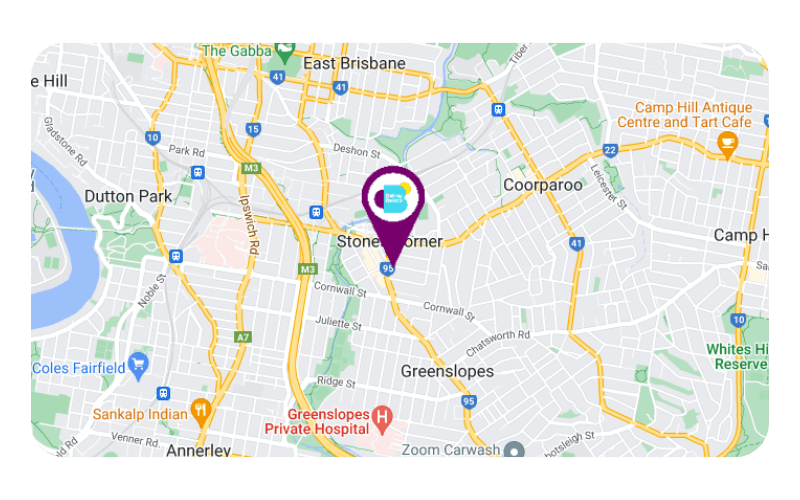
Brisbane has a wide range of providers — this page features services such as Better Rehab (Stones Corner and Chermside), Talk Health Therapy (Chermside), Therapy Near Me Brisbane (Brisbane City), Motion Health Kids Therapy (Underwood) and others across the city. When comparing options, consider:
- NDIS registration — check whether the provider is NDIS registered. Registered providers must meet quality and safeguarding standards. If your child's plan is agency-managed, you'll generally need a registered provider; plan- and self-managed families have more flexibility.
- Credentials and experience — support coordinators come from varied backgrounds. Where coordination is delivered by allied health professionals, look for relevant registration such as AHPRA (for regulated professions like physiotherapy and psychology), Speech Pathology Australia membership for speech pathologists, or Occupational Therapy Australia for OTs. Ask about their experience working with children and families.
- Waitlists — availability varies. Ask how soon they can start and how quickly they respond to messages.
- Telehealth — many coordinators offer phone and video support, which can be handy between face-to-face meetings or if you're outside inner Brisbane.
- Independence — some families prefer a coordinator who isn't also delivering therapy, to avoid conflicts of interest. Ask how they manage this.
Questions to ask before you start
- Are you NDIS registered, and what level of support coordination do you provide?
- What are your hourly rates, and how do you track hours against my child's budget?
- What's your current waitlist and how often will we be in contact?
- Do you have experience with children of my child's age and needs?
- Do you offer telehealth as well as in-person meetings?
- How do you help prepare for a plan reassessment?
Taking the time to ask these questions helps you find a coordinator who genuinely fits your family and makes your child's plan work harder for you.