What speech pathology involves for children
Speech pathologists (sometimes called speech therapists) support far more than just talking clearly. For children, they work across several areas:
- Speech sounds — how a child pronounces words and whether others can understand them.
- Language — understanding what's said (receptive language) and putting words together to express ideas (expressive language).
- Social communication — taking turns, understanding body language and having back-and-forth conversations.
- Fluency — stuttering and the flow of speech.
- Voice — hoarseness or unusual vocal quality.
- Feeding and swallowing — chewing, managing textures, and safe eating and drinking.
- Early literacy — the language foundations that support reading and writing.
Many children also use alternative and augmentative communication (AAC), such as picture systems or speech-generating devices, and a speech pathologist can help set this up.
Signs your child might benefit from support
Every child develops at their own pace, but it can be worth booking an assessment if you notice:
- Fewer words than expected for their age, or not combining words.
- Speech that's hard for unfamiliar people to understand.
- Trouble following instructions or answering questions.
- Frustration when trying to communicate.
- Stuttering that persists or worsens.
- Difficulty with eating, drinking, or a very limited range of foods.
- Limited eye contact, gestures or interest in interacting.
Trust your instincts. If you're worried, an early conversation with a professional can bring clarity — and early support often makes a real difference.
Suitable ages
Speech pathology is available from infancy (including early feeding support for babies) right through the school years and into adolescence. There's no need to "wait and see" until a child is older — early intervention is well recognised as valuable, and therapists tailor their approach to the child's developmental stage.
What a first appointment looks like
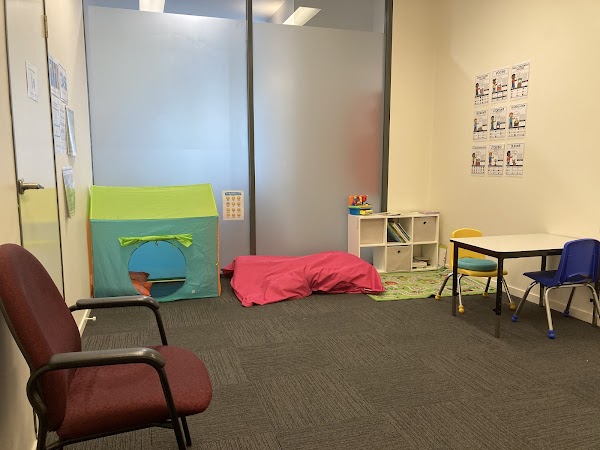
An initial appointment is usually about gathering information and getting to know your child. Expect the speech pathologist to:
- Ask about your concerns, your child's history and how they communicate at home.
- Observe or play with your child to see their communication in action.
- Carry out informal or formal assessments, depending on age and needs.
- Discuss possible next steps, which might include a more detailed assessment, a block of therapy, or a review down the track.
First appointments often run 45–60 minutes. Bring along any previous reports, a list of your questions, and — where possible — a comfortable, unhurried mindset so your child feels relaxed.
Typical costs and NDIS funding
Speech pathology in Australia is commonly charged per hour or per session. As a general guide, private sessions often fall in the range of around $180–$220 per hour, though this varies between providers and by service type. The NDIS publishes price caps for allied health, and registered providers cannot charge above these caps for NDIS participants — always confirm current pricing directly with the provider, as fees change.
Under the NDIS, speech pathology usually sits within the Capacity Building — Improved Daily Living budget. If your child has NDIS funding, you can generally use it for assessments, therapy, reports and some equipment, depending on your plan. Families outside the NDIS may be able to access support through Medicare (with a GP referral and care plan, which offers limited rebated sessions) or private health extras — check your individual eligibility.
How to choose a provider in Toowoomba
The providers featured on this page are spread across suburbs including Newtown, Toowoomba City, East Toowoomba, Rangeville, Kleinton, South Toowoomba and the CBD. When comparing them, consider:
- Credentials — look for a Certified Practising Speech Pathologist and membership with Speech Pathology Australia. This confirms qualifications and ongoing professional standards.
- NDIS registration — if you're using NDIS funding, check whether the provider is NDIS-registered. Note that self-managed and plan-managed families can also use non-registered providers, so ask how your plan is managed.
- Waitlists — waitlists are common. Ask how long the wait is for both an initial appointment and ongoing therapy, and whether you can join a cancellation list.
- Experience with your child's needs — some clinicians focus on feeding, stuttering, AAC or particular age groups.
- Telehealth — video sessions can be handy for families in outer suburbs or on busy weeks; ask whether it's offered and whether it suits your child.
- Location and logistics — consider parking, clinic-versus-home visits, and whether school or childcare visits are available.
Questions worth asking
- Are you a Certified Practising Speech Pathologist with Speech Pathology Australia?
- Are you NDIS-registered, and do you work with self- or plan-managed participants?
- What's your current waitlist for assessment and for ongoing therapy?
- What experience do you have with my child's specific needs?
- What are your fees, and how do they compare with the NDIS price caps?
- How do you involve parents and set goals?
- Do you offer telehealth, home or school visits?
- How and when will you provide reports and progress updates?
Taking the time to ask these questions helps you find a therapist your child feels comfortable with — which matters just as much as qualifications for making progress.